
credential verification
-
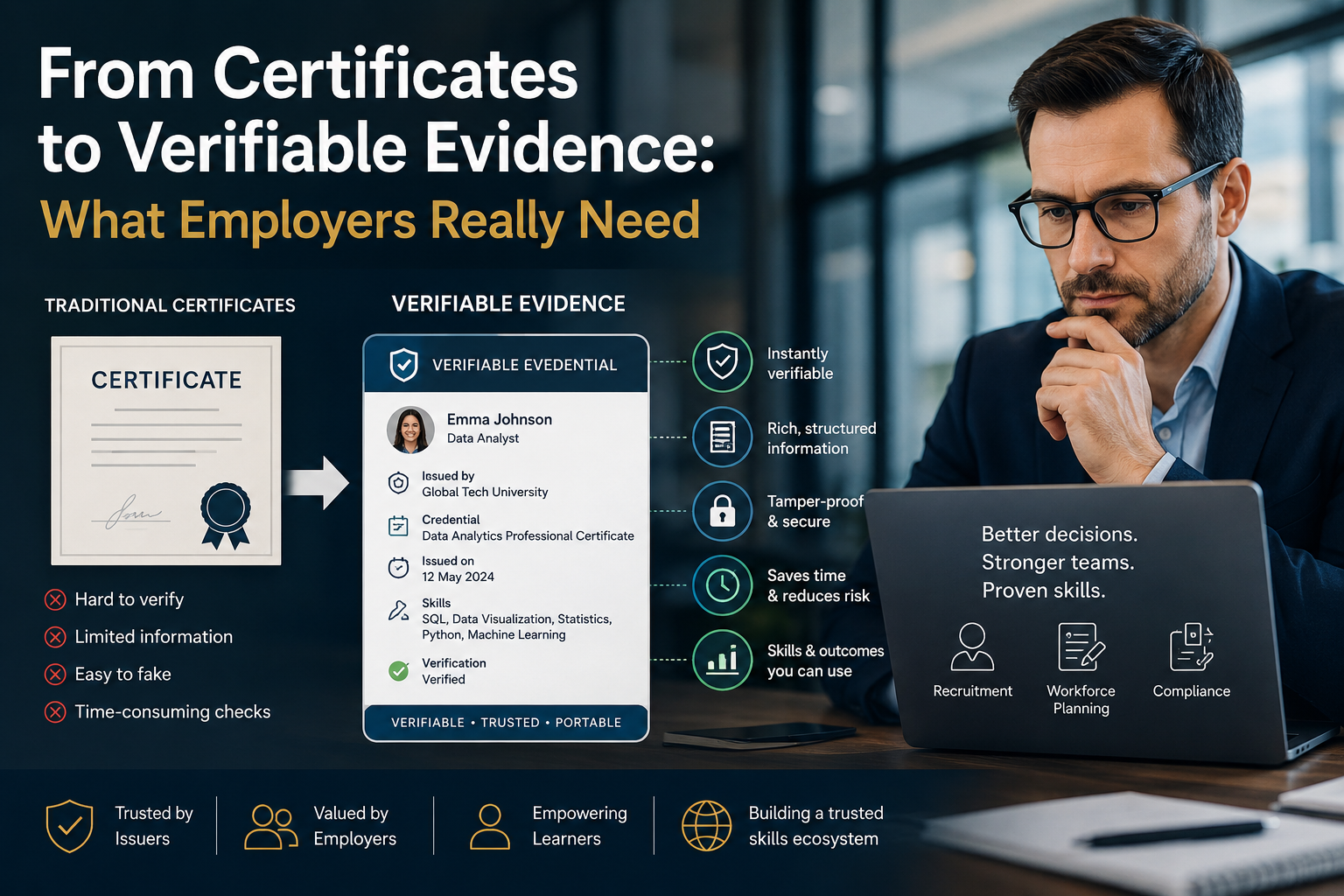
From Certificates to Verifiable Evidence: What Employers Really Need
For decades, certificates have acted as shorthand for achievement. A candidate presents a qualification, an employer recognises the issuing institution, and the certificate becomes part of the recruitment decision. In many cases, this still works. Degrees, diplomas, apprenticeships, professional certificates, and industry awards continue to carry value. But the labour market has changed. Employers now…
-
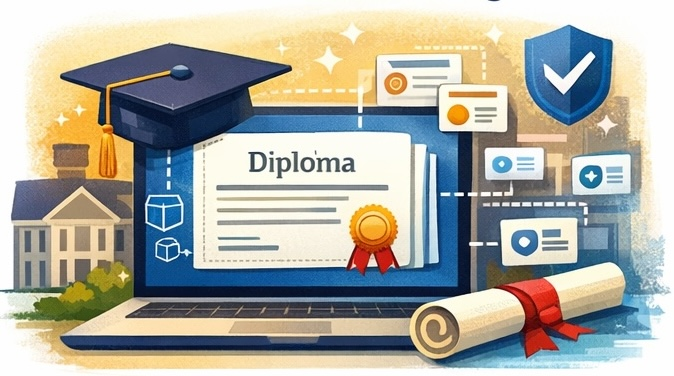
Why Digital Credentials Are Becoming Core Education Infrastructure
Education systems are no longer judged only by what they teach. They are increasingly judged by what learners can prove, how quickly that proof can be trusted, and whether learning achievements translate into employment, progression, compliance, and lifelong opportunity. This is why digital credentials are becoming core education infrastructure. For many years, certificates have acted…
-
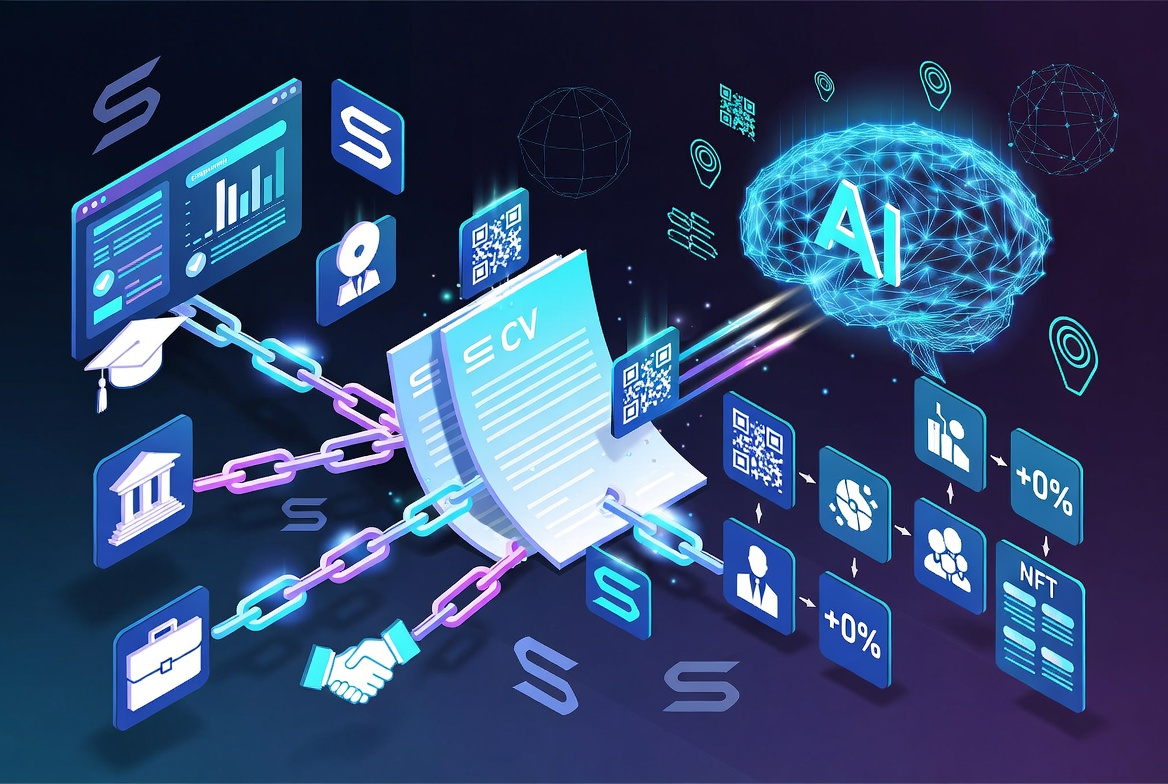
Beyond the CV: How Blockchain and AI Are Redefining Trust in the Job Market
For decades, the traditional CV has remained largely unchanged: a static, self-reported list of qualifications that is notoriously difficult to verify. As the job market evolves at breakneck speed, this reliance on unverified claims is widening the skills gap and slowing down recruitment. At AlmaBridge, we believe the future of work requires a new standard—one…
-

Beyond “Mickey Mouse Degrees”: Why Learning Outcomes Matter More Than Course Titles
In recent years, the phrase “Mickey Mouse degree” has frequently appeared in UK political debate and media coverage. The term is often used to criticise university courses perceived as lacking academic rigour or offering limited employment prospects. Politicians and commentators have suggested that certain subjects—particularly in the arts, media, or newer interdisciplinary fields—represent poor value…